How Saudi Arabia and the UAE Design National Pride

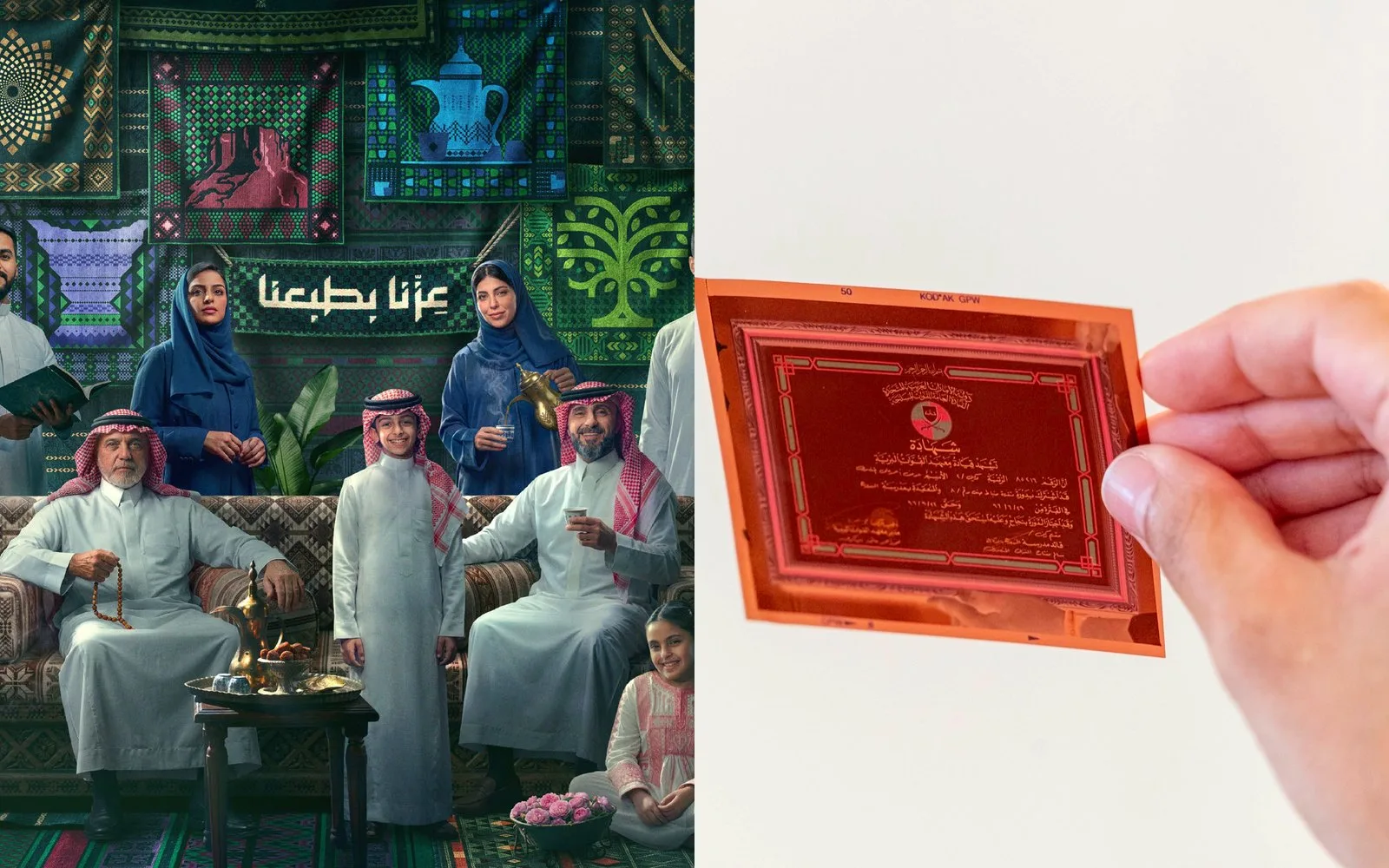
Two of the Gulf’s biggest annual brand moments both landed new identity systems in the back half of 2026. Read together, they are a useful case study in national identity design: how a government designs something meant to be worn by an entire country at once, not just admired from a distance.
Saudi Arabia: a toolkit, not a logo
Saudi Arabia released the official visual identity for its 2026 National Day on July 30, ahead of the September 23 and 24 holiday marking the 1932 unification of the Kingdom under King Abdulaziz. The identity, announced by Turki Alalshikh, Chairman of the General Entertainment Authority, kept the slogan from the prior year, a line about national pride rooted in nature (outlets vary on the exact English wording), and built the visual language around courage, ambition, authenticity, generosity, hospitality and determination. What actually ships, though, is not a single mark: it is a full package of logos, typography, colour palettes, illustrations and templates, built explicitly as the common visual standard for government agencies, private-sector companies and event organisers across digital, print and outdoor media, office materials, merchandise and signage. That is the real design decision worth studying. A national identity used once by one ministry has no compounding value. A system distributed as a usable toolkit, specified down to templates a private company can drop its own content into, turns one creative brief into thousands of consistent touchpoints without a central team producing any of them directly.
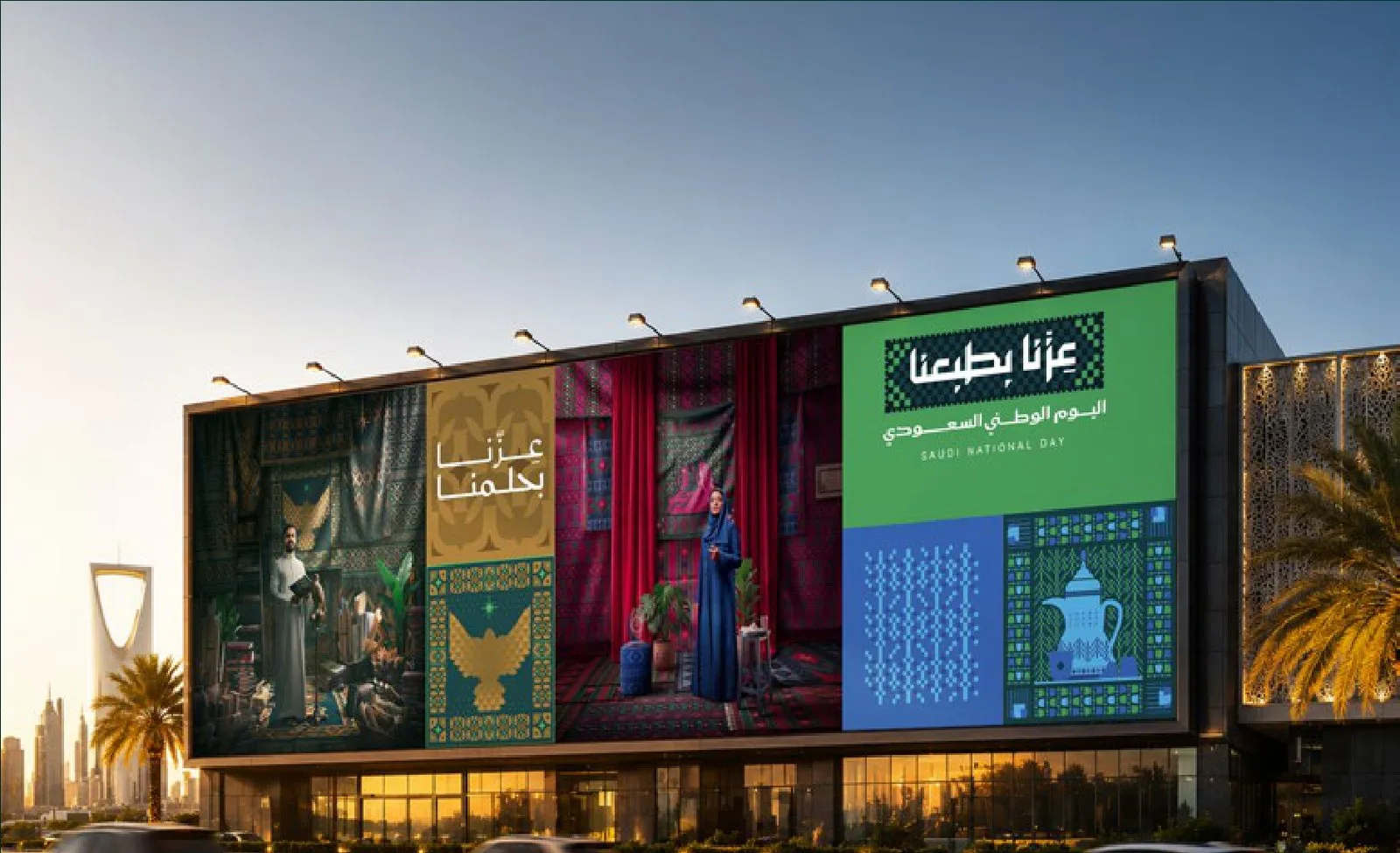
A national identity system is not a logo. It is permission: for a government department, a private company and a school to all look like they are celebrating the same thing.
The UAE: the same idea, plus a competition
The UAE’s approach to its 55th Eid Al Etihad, the national celebration marked on December 2, follows the same toolkit logic with one genuinely distinctive addition. The 55th Eid Al Etihad Team revealed its visual identity on October 8, starting a 55-day countdown to the celebration. The concept draws on the people of the UAE, their homes and shared memories, built around the idea of the country as “a family of families,” tying into this year’s Year of Family theme. The design pulls from traditional Emirati architecture and a family-album photography style that mixes archival images with current moments, credited to the 55th Eid Al Etihad Team with Eisa Alsubousi, Director of Strategic and Creative Affairs, as the named voice behind it. The more interesting move sits alongside the identity rather than inside it. Design Commission Abu Dhabi, chaired by Her Highness Sheikha Shamsa bint Hamdan bin Mohammed Al Nahyan, partnered with Emirates Post to launch a nationwide open call on September 15 inviting UAE nationals and residents, including students and emerging creatives alongside professional designers, to design the official Eid Al Etihad 55 commemorative stamp. Applicants submitted three to six designs around one theme with a written concept, judged by a DCAD and Emirates Post panel, with three finalists shortlisted and a winner due in early November (Gulf News reports 3 November), carrying prizes of Dh10,000, Dh7,000 and Dh3,000 for first through third place. Emirates Post keeps final approval and may adjust the winning design before it is issued as an official stamp.
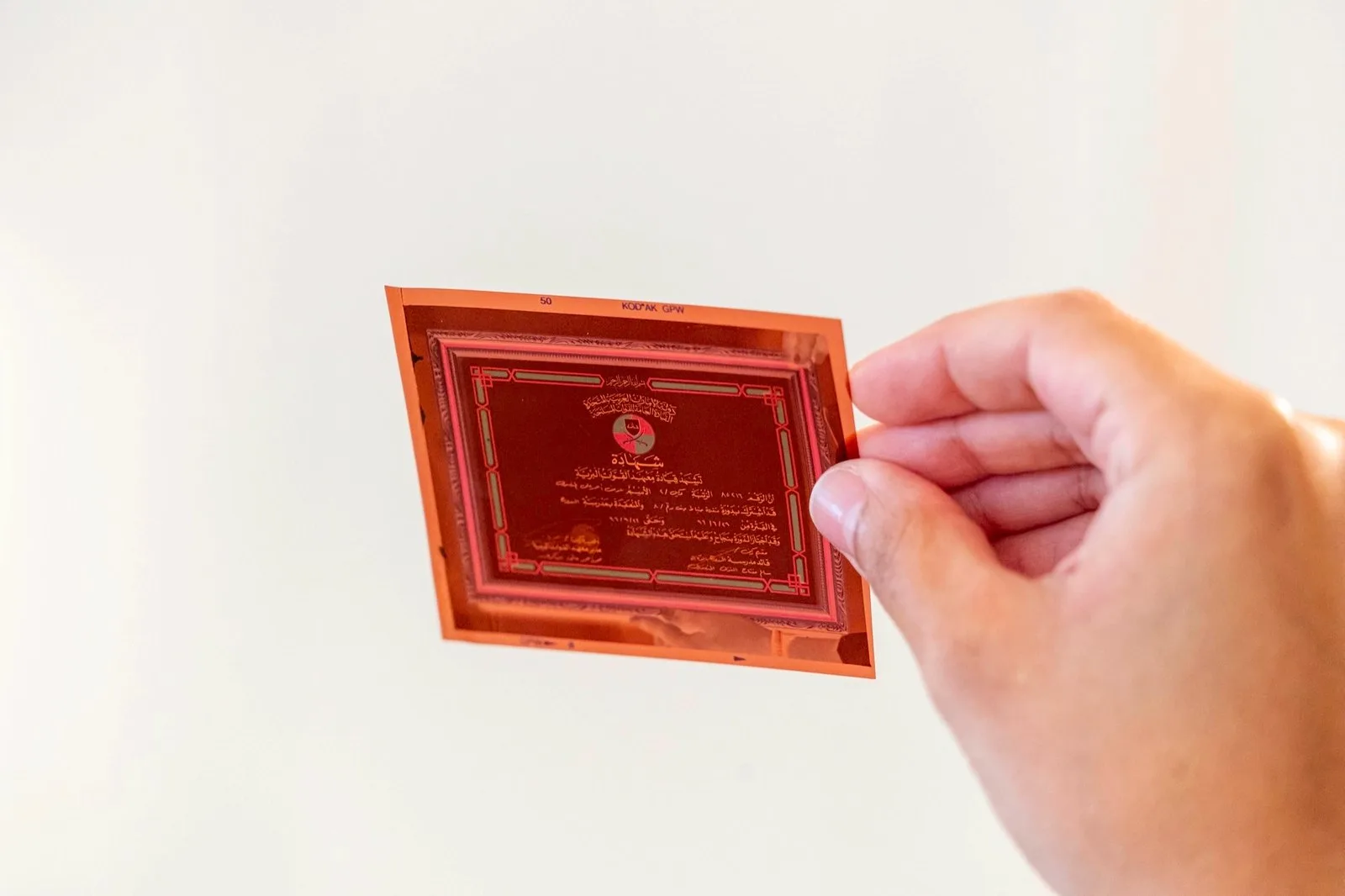
Why the stamp competition is the sharper brand move
Turning one small, specific piece of a national identity system into an open competition does something a top-down toolkit cannot: it makes the national brand something residents actively make, not just something they are handed. A government department using the approved template is compliance. A student submitting a stamp design that might actually get printed and carried in every post office in the country is participation, and participation is a much stronger brand-building mechanism than distribution alone, because the people who make something feel differently about it than the people who are simply given it. Saudi Arabia’s system is more mature and more comprehensive as pure design infrastructure. The UAE’s stamp competition is the more interesting brand idea precisely because it is smaller: a single, symbolic touchpoint turned into an invitation rather than an output.
Also readVisit UAE Puts Seven Emirates Under One Tourism Brand. How One Identity Holds Many Places.
What to Watch
Watch the UAE’s stamp winner reveal in early November and the full Eid Al Etihad programme toward 2 December, which should show whether the participation idea carries beyond the stamp.
Keep reading