
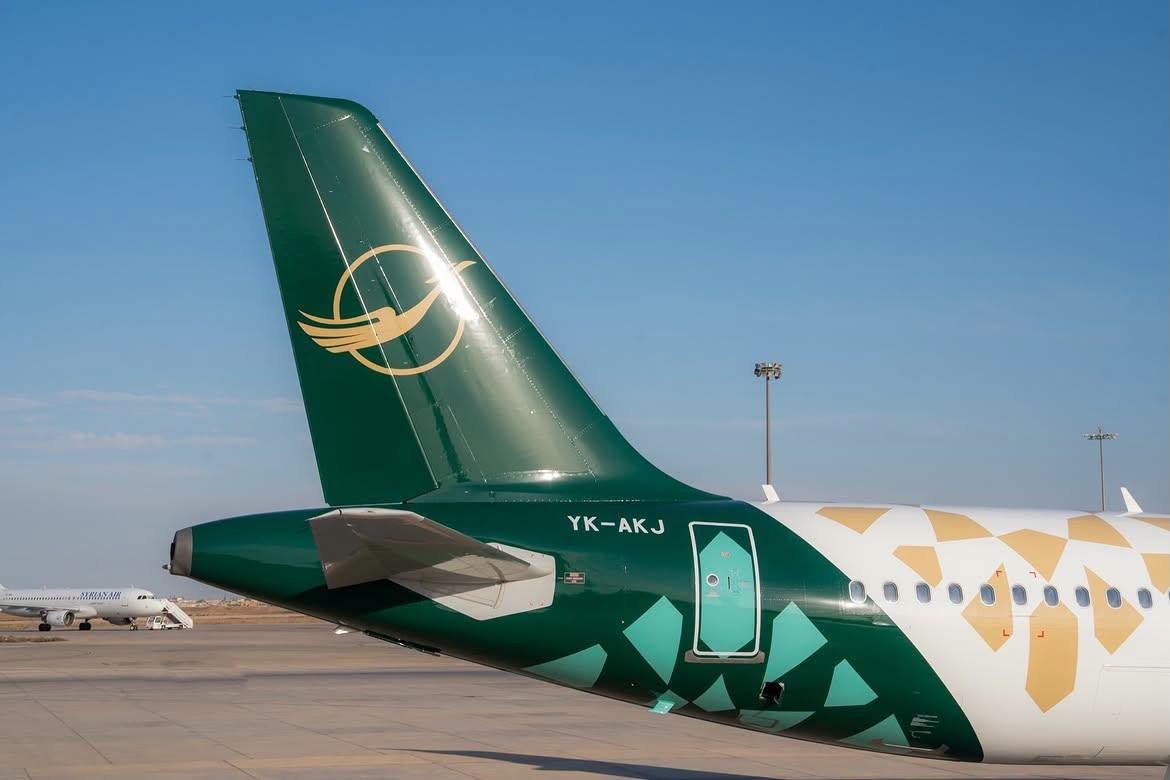
The Syrian Airlines rebrand, a new corporate identity and strategic vision, was unveiled at Damascus International Airport on October 5, 2026, alongside Syria’s General Authority of Civil Aviation and Air Transport. The carrier’s long-standing blue scheme is gone, replaced by dark green covering the rear fuselage and tail, gold detailing, and a stylised Simurgh bird on the tail and engine covers. Geometric patterns drawn from Eastern and Islamic architecture run across the rear of the aircraft, and the English name “SYRIAN” now sits alongside the Arabic. The first repainted aircraft, an Airbus A320-200 registered YK-AKJ, was finished at Ostrava Airport in the Czech Republic.
A rebrand with a fleet problem, not a design problem
The identity change is the visible part of a much larger repositioning. Syrian Airlines began 2026 with nine destinations and three operational aircraft, according to its CEO, and now operates six. The carrier’s own target, stated by CEO Anwar Akkad at the Damascus unveiling, is to double the fleet to 12 aircraft and reach 25 destinations by the end of the year. These are company plans, not results. Two A320-family jets, each configured with 12 business and 144 economy seats, arrived in August under a fleet renewal programme. Recent route additions include Amsterdam, Vienna, Copenhagen and Moscow, and a new reservation system meeting international standards is due in early November. That is an unusually steep growth curve for any airline to deliver inside a single year, and the gap between target and delivery is where this story becomes genuinely interesting for anyone who studies rebrands rather than just reports them. A new tail design costs a paint shop and a press event. Doubling a fleet and quadrupling a route map costs aircraft leases, crew training, slot negotiations and airport capacity, none of which move at press-release speed.
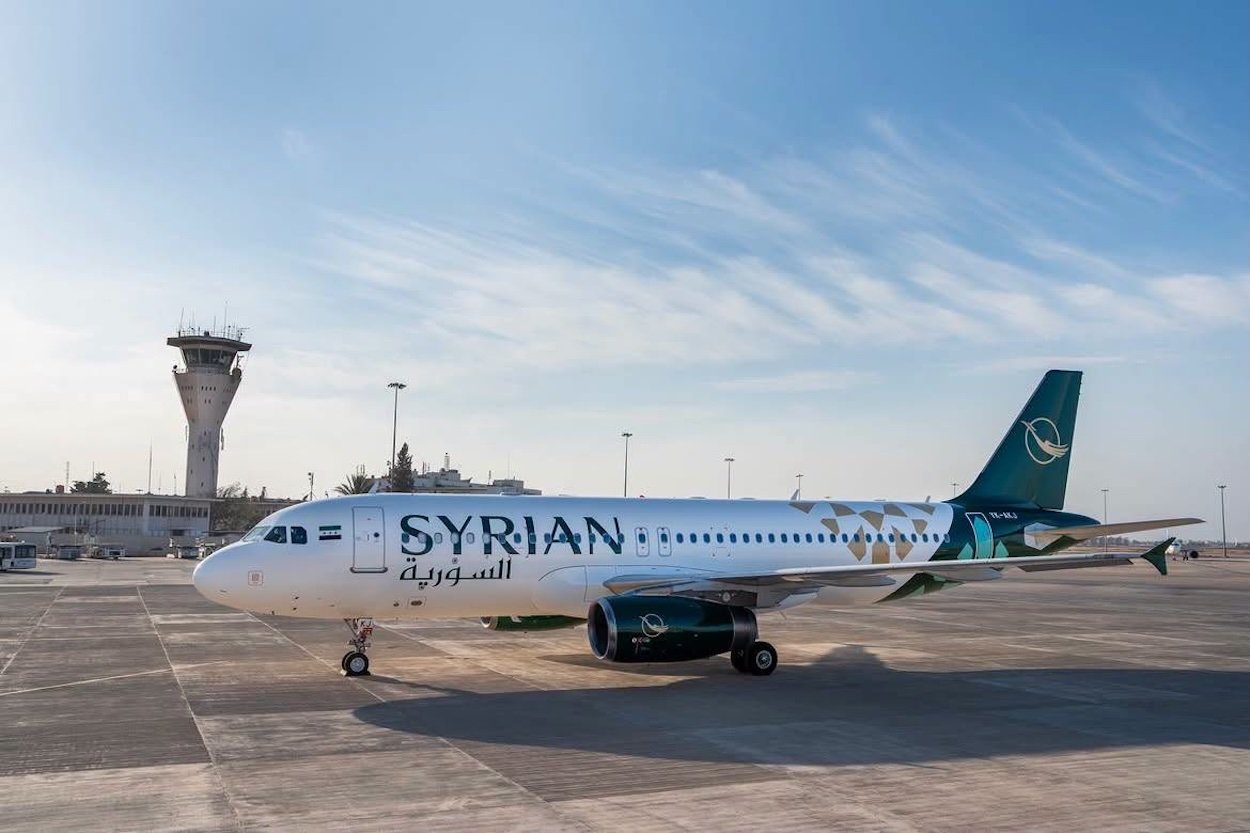
A livery is the easiest part of a national carrier’s rebrand. Filling nine new routes a year with paying passengers is the hard part.
Why this rebrand carries more weight than most
Most airline rebrands are commercial decisions dressed up as design stories. This one is closer to the reverse. Syrian Airlines is explicit that the identity change sits inside a broader reconnection with international aviation after years of restrictions and sanctions, alongside a reported $4 billion agreement signed in November 2025 to develop and expand Damascus airport, including $250 million in financing for aircraft purchases. A flag carrier changing its colours while the country around it is renegotiating its place in the world is not a marketing exercise. It is one of the few brand decisions a government can make that is instantly visible to every other country’s air traffic control, every codeshare partner and every passenger choosing between carriers on a booking screen. That is a pattern common in state-linked and national-symbol rebrands: the identity work is cheap and fast, deliberately so, because it needs to signal change before the operational reality can catch up. The risk is the same every time. A new look creates an expectation. If the schedule, the on-time performance and the safety record do not follow within a reasonable window, the rebrand reads as decoration rather than substance, and the next piece written about the carrier becomes about the gap rather than the ambition.
Also readEtisalat at 50: The Rebrand Story From e& to Etisalat
What brand teams should take from it
For anyone advising a brand coming out of a period of disruption, crisis, or reputational repair, the Syrian Airlines case is a clean illustration of sequencing risk. The identity should usually land after enough operational proof exists to support it, not before. Here the order is reversed by necessity: Syria’s broader reopening needs visible signals of normalcy now, and an airline’s paint job is one of the fastest signals a state actor can produce. That is a defensible strategic choice. It is also a bet that the operational delivery over the next twelve months will catch up to the story the livery is already telling.
What to Watch
Whether Syrian Airlines reaches even half of its 25-destination target by December, and whether the fleet renewal keeps pace with the route announcements, will determine if this rebrand reads in a year as the start of a genuine recovery story or as an early flag that outran the operation behind it.