Etisalat at 50: The Rebrand Story From e& to Etisalat

BTC Lens
A name can serve one strategy, then the next
The 2022 move to e& gave a telecom a way to introduce a wider technology and investment group. The 2026 move to Etisalat gives that group a name built on 50 years of trust as it focuses on AI and connectivity. Most coverage reads it as a reversal. It reads better as a sequence: each name suited the stage the company was in.
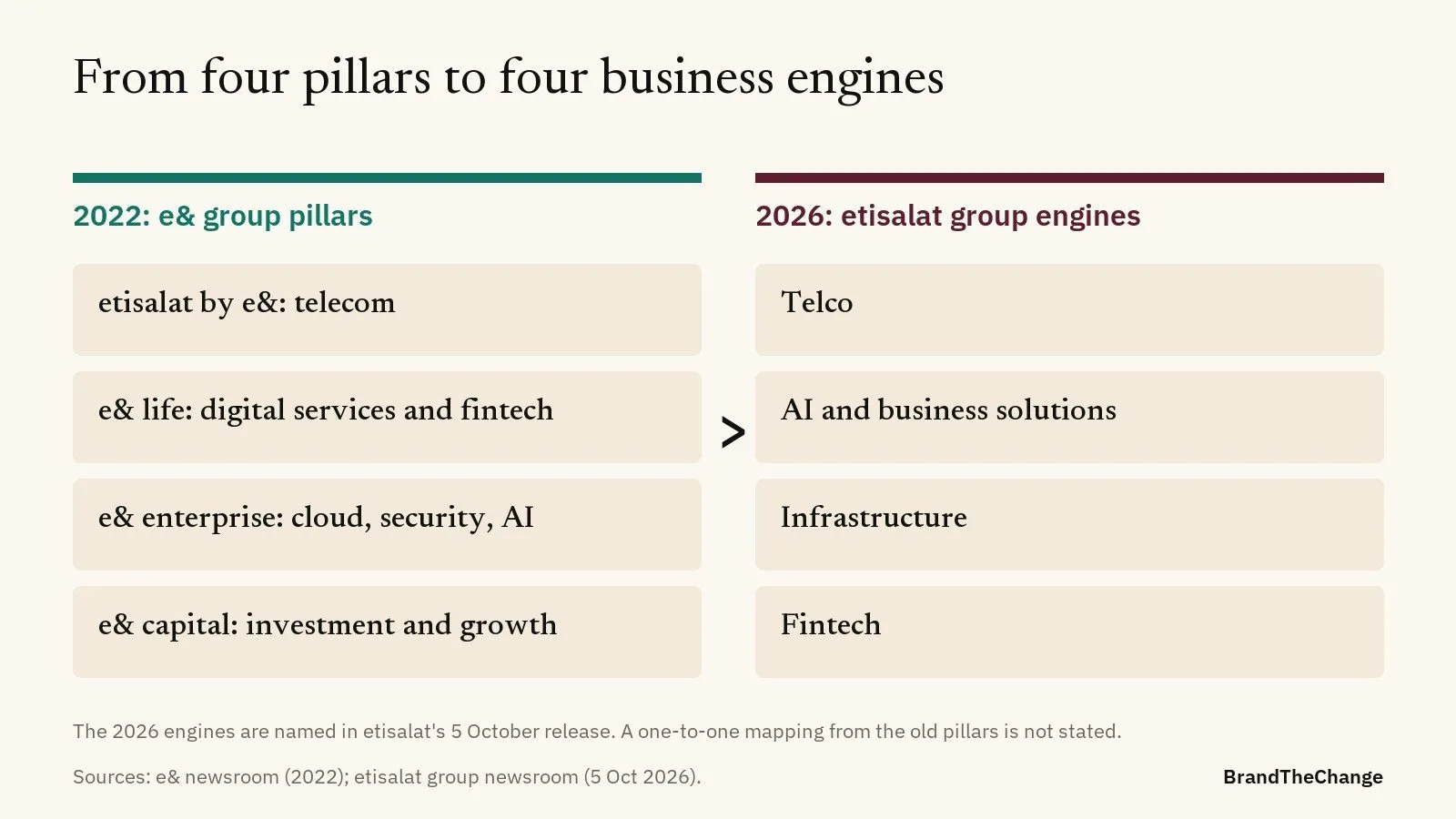
On 5 October 2026, as Etisalat group launched its 50th anniversary celebrations, it set out a new vision to become a leading AI-powered and enabling telco, “as it steps forward under ‘etisalat'”, according to the group’s own newsroom release. The name was confirmed to the Abu Dhabi Securities Exchange, as The National reported on 6 October. It is one of the more instructive brand stories of the year, because it compresses a full naming cycle into four years.
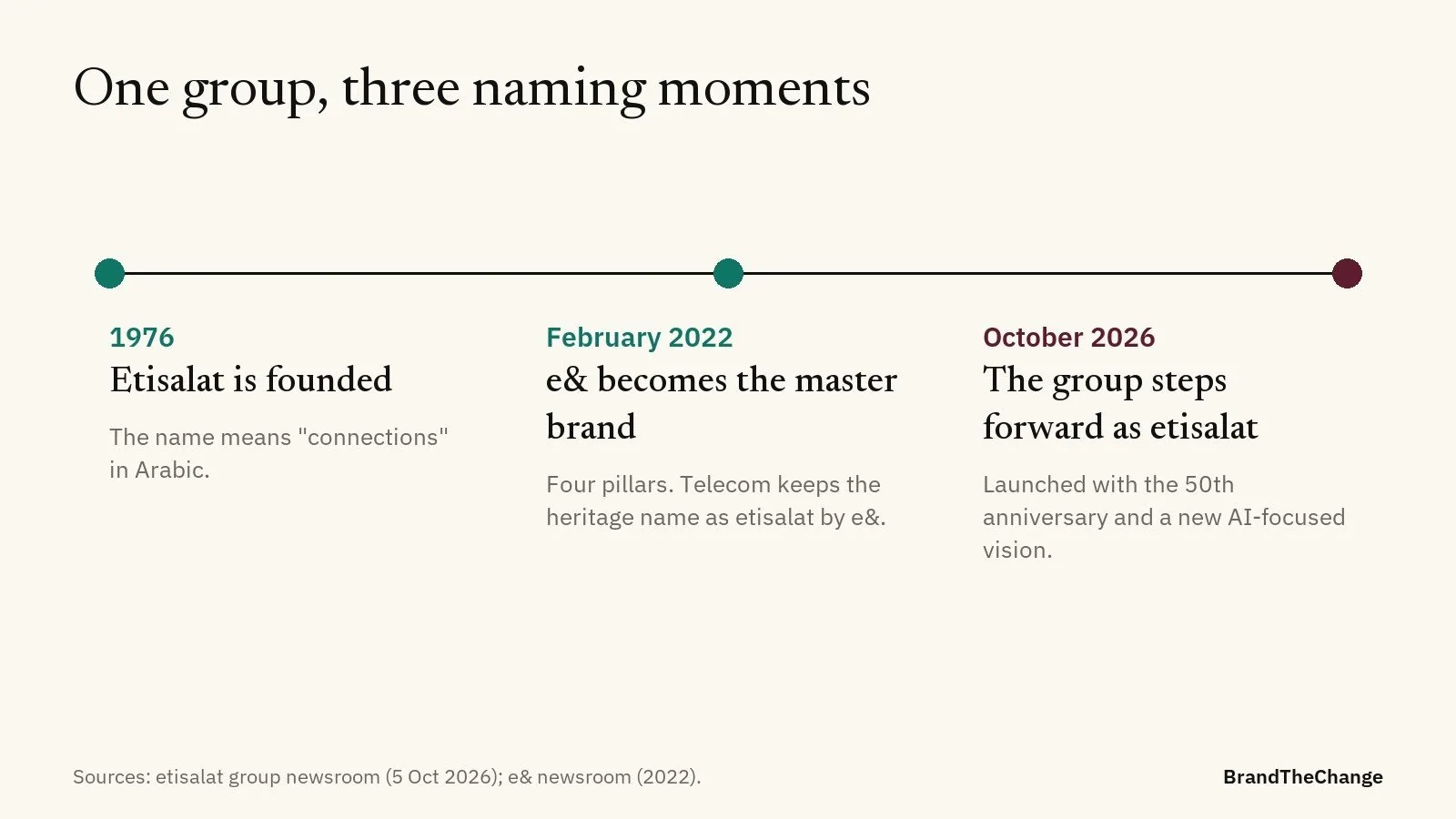
In the group’s own release, etisalat group is described as operating across 38 countries and serving more than 250 million subscribers, with a new strategy built around four business engines: telco, AI and business solutions, infrastructure, and fintech. The group newsroom now carries the etisalat name.
The origin: a name that already meant something
Etisalat was founded in 1976. In Arabic the word means “connections”, and the group says that purpose has guided it for 50 years. As Chairman Jassem Mohamed Bu Ataba Alzaabi put it in the release: “This is the same commitment that has guided this group for fifty years.”
That clarity helped the brand grow well beyond one country. In 2023 Brand Finance rated etisalat by e& the strongest brand in the Middle East, with a Brand Strength Index score of 89.1 out of 100 (Brand Finance). Few regional brands arrive at a rebrand from a stronger starting point.
2022: why the group became e&
In February 2022, Etisalat Group launched e& as its master brand, created with the London consultancy Wiedemann Lampe (Campaign Middle East). The reasoning was about scope. The group was growing beyond telecom into digital services, enterprise technology and investment, and a single operator name was a narrow frame for that story. It was presented at the time as the UAE’s first telecom company turning global.
The new structure had four pillars: etisalat by e& for telecom, e& life for digital services and fintech, e& enterprise for cloud, security and AI, and e& capital for investment. Group CEO Hatem Dowidar said at the time: “This reflects the growth mindset that drives us to create a future-ready business model” (e& newsroom). In a later conversation with Brand Finance he explained the intent: “We knew we had to signal to the world, to our staff and to ourselves as a management team that we were becoming something different.”
The brand value followed. e& reported that it led the UAE’s league table at USD 11.84 billion, a 129 per cent rise between 2020 and 2022. The group’s work with partners such as Airbus, showed the wider enterprise story the name was built to carry.
The ampersand did what it was built to do: it told the market that Etisalat was becoming a group, not just an operator.
2026: what changed, and why now
Three things lined up.
The anniversary. Fifty years is a natural moment to stand behind a founding name rather than a new symbol.
The strategy. The group’s first major commitment under its new strategy is an infrastructure project to lift international connectivity capacity from about 20 terabits per second to more than 500 by 2030, over 25 times today’s level, delivered through diverse routes with low-latency design. The chairman called it “a strategic step” for the UAE’s AI campuses, global cloud providers and the group’s customers across its markets.
The role of the brand. In 2022 the job was to widen the frame. In 2026 the job is to unify a focused group around connectivity, infrastructure, AI and fintech, which are all forms of connection. The original name now describes the strategy directly, where the symbol had to point toward it.
The group newsroom already shows the new identity: the swirl “e” mark above a lowercase etisalat wordmark, in place of the ampersand lockup.
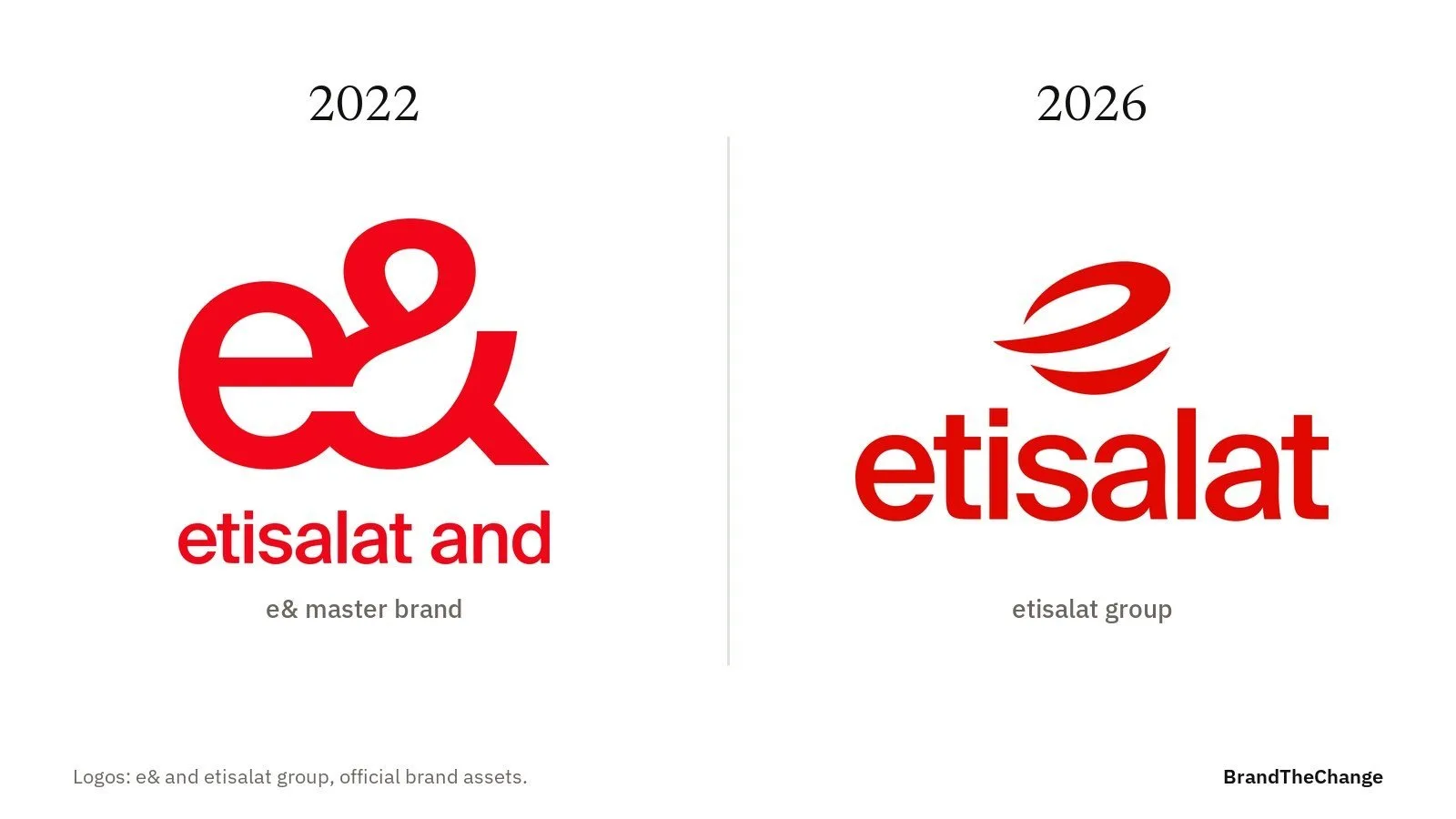
What it means for the brand
Three readings stand out.
- Heritage is an asset to keep, not a stage to leave. The Etisalat name stayed alive through the e& years in the UAE consumer brand, etisalat by e&. That continuity is what makes a move back to one clear name practical. A similar logic shows up in Freelander’s choice of the UAE for its global brand launch, where a heritage name carried a new business.
- Consolidation over complexity. A multi-pillar structure suits a group building new businesses. A group that is focusing can carry one clear name.
- Naming follows strategy. The two names were not rivals. The first opened a chapter of expansion. The second opens a chapter of integration around AI and infrastructure.
How the market and public responded
UAE and international business and telecom outlets covered the announcement, and most led with the group’s own wording about heritage, strategy and the AI era. The coverage points to where attention is going next: how the visual identity reaches stores, apps and network assets across 38 countries, and how the e& life, e& enterprise and e& capital names fit the new structure.
Three lessons for brand teams
- Keep the founding name alive somewhere in the system, so it is there when you need it.
- Treat a rebrand as a tool for a chapter, with a clear job and a review point.
- Let the strategy lead and the name follow, never the other way round.
What to Watch
Watch how the group publishes the rollout: the status of the e& life, e& enterprise and e& capital names and the timeline across markets. That detail, more than the announcement, will show how much of the 2022 architecture carries forward.
Keep reading