World’s Largest Food Expo Grows Up: Inside Gulfood 2026’s Strategic Pulse

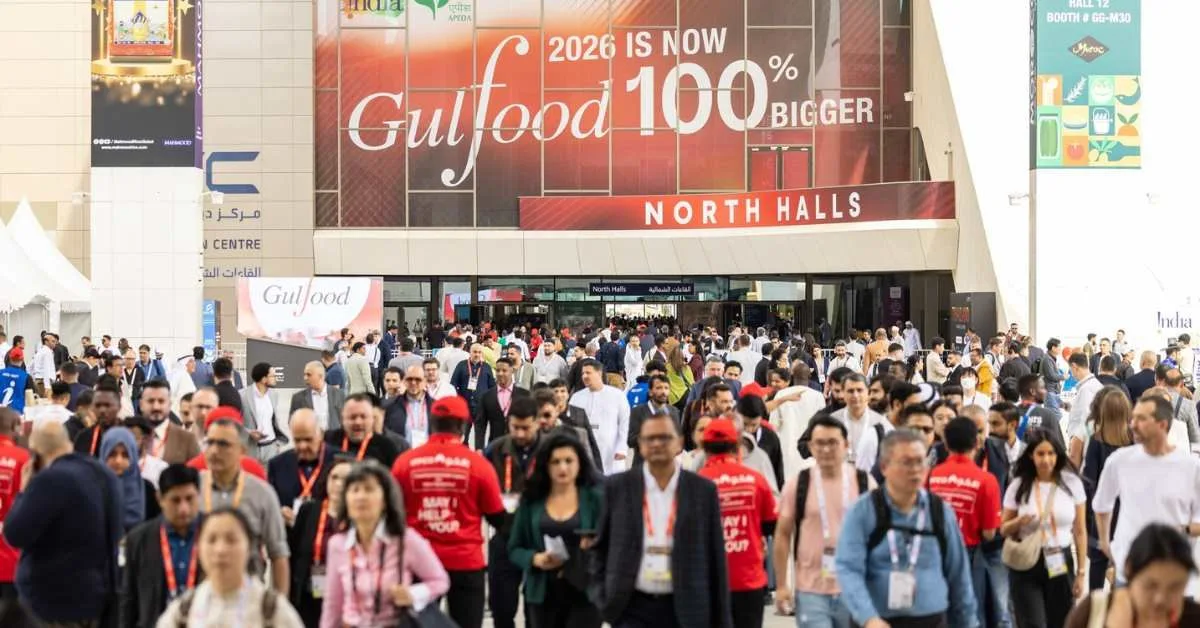
Gulfood 2026 is already rewriting food-industry history. The 31st edition runs from January 26–30 has surpassed even Dubai’s own sky-high expectations. Expanding not just in ambition but in physical footprint, the world’s largest annual food and beverage event now operates simultaneously across two mega venues – the traditional Dubai World Trade Centre and the newly minted Dubai Exhibition Centre at Expo City Dubai – a dual-site first in its history and a symbolic signal that Gulfood is not just a trade show anymore, but a global food system summit in motion.
This year’s numbers alone tell a story of scale: more than 8,500 exhibitors representing 195 countries, showcasing over 1.5 million products across 280,000 square metres of sold-out floor space. From strategy sessions with international chambers to regional pavilions teeming with national pride, Gulfood 2026 has become a crucible where commercial pressure meets cultural identity.
It was fitting that His Highness Sheikh Mohammed bin Rashid Al Maktoum presided over the exhibition’s opening days, touring both venues and reiterating the UAE’s vision of Dubai as a nexus for global trade, innovation, and food security. His remarks, echoing throughout the halls, framed the event as more than a marketplace – a cornerstone of economic resilience and strategic cooperation.
For brands and branding people on the ground, the feel of Gulfood 2026 is unmistakable: this is an exhibition that matters because it moves markets, not just products. Companies are not here to dazzle with gimmicks; they are here to chart their next quarter’s targets and even the next decade’s ambitions. When brands exhibit alongside international MOUs being signed and bilateral trade discussions unfolding, the showfloor becomes a real-time barometer of food geopolitics.
From the India Pavilion bustling with over 160 agri and processed food exhibitors tied to the country’s first-time role as a partner country – a strategic push buoyed by the India-UAE CEPA trade pact – to Pakistan’s record delegation of agro-based and value-added brands seeking deeper export routes, national representation at this edition reads like a map of global export intent.
Small nations and emerging producers are also making their presence felt. Delegations such as Tajik dried fruit exporters are showcasing heritage products not as curiosities, but as export-ready brands engaging distributors and buyers from across continents. Beyond the big pavilions, this year’s show reveals a mosaic of micro-stories with global potential.
Amid all this, food trends are visibly shifting. Coverage from the floor highlights a growing appetite for health-oriented offerings, from protein-fibre snacks to mushroom-based products and other plant-forward innovations that reflect evolving consumer sensibilities. Brands like Nutriverse India are riding this wave, presenting clean-label snack portfolios that speak to both health consciousness and export-ready design.
But it’s not just what is on display; it’s how it is displayed. This year’s product entries – from premium basmati rice brands to artisanal mixers, legume snacks to functional dairy ingredients – reveal a design discipline that transcends category noise. Packaging and brand narratives show a marked lean toward clarity and export universality, suggesting that visual language is now as critical as product quality for crossing borders.
What distinguishes Gulfood 2026 from editions past is not merely its record size, but its strategic permanence. Organisers and participants alike describe the event as an engine for agri-trade, food diplomacy, and technological adoption, rather than a periodic marketplace. Partnerships announced here, business briefings hosted by chambers of commerce, and the presence of heads of state amplify a message: Gulfood sets the rhythm for global food economics, not just annual appetites.
Dubai is on expanding exhibition infrastructure – a $2.7 billion upgrade that underpins the new Expo City venue – underscores the city’s confidence in hosting events that are no longer transactional but transformational. Gulfood 2026 not only records the state of the industry, it prophesies its next phase: one where supply chains are more interconnected, brands are more intentional, and food production is framed as a collective global enterprise.
This year’s Gulfood exemplifies a deeper truth: in an era of digital showcases and virtual launches, physical presence still matters – especially when presence converges with policy, negotiation, and export strategy under one roof. Gulfood 2026 remains, in every sense, a pivotal arena where global food branding is being authored and scripted in real time.
Keep reading